As of 2022, less than 25% of the electricity in the European Union was generated by nuclear power and the amount of clean, low carbon electricity being produced is decreasing as nuclear power units come offline without replacement.
This is because the media has historically downplayed the effects of climate change but over-hyped the dangers of nuclear energy. It is important to recognise that climate change effects from burning fossil fuels kill very many more people per year than die from making nuclear energy.
Survival: an urgent issue we face as humanity is that by burning fossil fuels, carbon dioxide (CO2), a ‘greenhouse gas’ is released, contributing to much of the man-made excess global heating. The impact of over-heating our relatively tiny atmosphere, is a noticeable extreme of weather, eg droughts or flood, experienced by nations worldwide.
Energy security: ensures the lights stay on in the absence of increasingly unreliable imported fuels from unstable countries, or variable weather-dependent sources. Nuclear energy is the obvious low-carbon substitute to power a planet of over 8 billion people due to it’s incredible energy density. The nuclear option will enable us to be self-sufficient, providing security of supply with a ready source of low carbon energy to meet our growing electricity needs for years to come. Capacity factor = 92% and lifespan ~ 50 years.
Safe
Nuclear energy is incredibly safe for the amount of energy it produces, but rare accidents are quickly broadcast. The Nuclear Industry is the most closely regulated and monitored industry in the world.
The design of new build power plants is “passively” safe; they shut themselves down without the need for additional systems if any abnormality of operation occurs.
Affordable link
The nuclear option is not linked to market prices for oil and gas and is, at the very least, cost competitive with other forms of electricity production in the UK. It should be noted that in France, where nuclear power generation is the dominant technology, the price for electricity per kilowatt/hour to the consumer is just over half of what we pay in the UK.
Energy density matters
Nuclear fuel required for life is roughly 1 kg* compared with 500,000 kg* fossil fuels, or 10,000 million kg renewable energy* and requires minimal mining in terms of concrete, glass, steel and critical minerals.
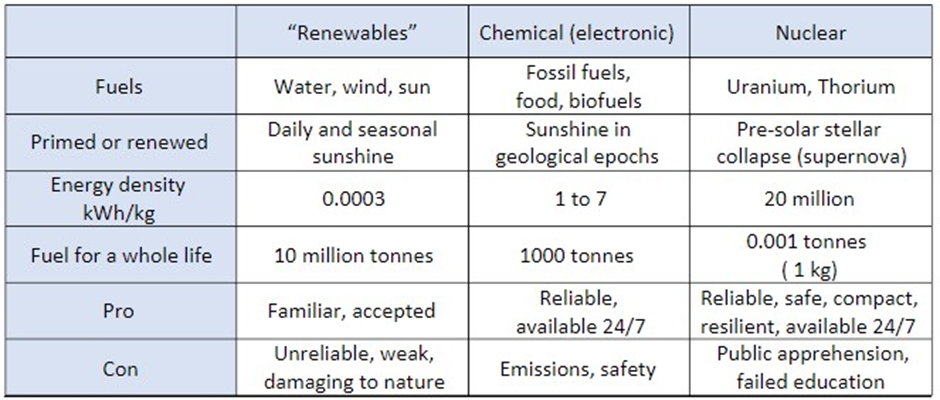
Our concern is that although it is clean and reliable, nuclear fission is not widely recognised in a favourable light for our energy needs since the media has portrayed far-fetched stories of nuclear horrors from energy plants, yet it is absolutely vital if we are to displace fossil fuels, due to its exceptional energy density, and both large and small reactors are good for this.
*Based on figures calculated in Nature, energy and Society, by Professor Wade Allison, a single person uses (50,000,000,000/70,000,000) x 24 x 365 x 76 Watt-hours during a lifetime if they live to average age of 76
Nuclear Waste
Storage and disposal of the very small amount of waste produced by nuclear reactors per TWh is safely managed, well known, and never hurt anyone.
Fact: the coal industry is permitted to release twice as much radioactivity to the environment than the nuclear industry.
Updated every three years, the Radioactive Waste Inventory is compiled by the Department for Business, Energy and Industrial Strategy (BEIS) and the Nuclear Decommissioning Authority (NDA) in the UK.
Its publication is one facet of the continuing commitment of the UK Government and the organisations responsible for radioactive wastes to openness and transparency in matters relating to the management of these wastes.