Fossil fuels – gas, coal, oil and more recently shale gas – are used in cars and power stations for our energy needs but there are many dangerous pollutants that arise from burning these fuels.

This is the combustion reaction of burning fossil fuels (CxHy ) in a conventional gas power station:
The products are:
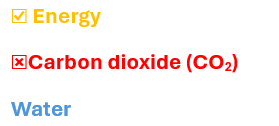

Carbon dioxide is a damaging greenhouse gas that traps infra red radiation (heat in the environment) and upsets the natural balance of the earth. As well being produced by diesel and petrol cars, it is also produced when gas is burned in Combined Cycle Gas Turbines to make electricity produced in the UK, particularly as it backs up unpredictable spikes of renewable energy.
This is clearly NOT a good thing because gas is particularly difficult to transport into the 50 or so power stations where it is burned around the country, without accidentally releasing methane. And methane is thought to be 80 x more damaging as a greenhouse gas than the combustion product, carbon dioxide!
Nuclear fuels are heavy metals, such as uranium and thorium, where energy is released from bombarding their nuclei. This process does not involve a chemical combustion reaction with carbon, so does not produce long-lived greenhouse gases such as carbon dioxide, nor any other airborne chemical pollutants.
Security of Supply: Fossil fuels are a finite resource, the cost of which increases sharply as the availability decreases. And countries like ours have been increasingly reliant on foreign imports of coal, oil and gas – all subject to world-market forces of supply and demand. It means the cost of electricity is tied to the price of the fuel used to produce it. And the more we import, the more control we lose over our ability to set a fair price for the electricity we consume.
Greenhouse Effect / Global warming: Although carbon dioxide constitutes a very small fraction of Earth’s atmospheric mix, it has increased by 50% since the beginning of the industrial revolution, causing much irreversible damage to the biosphere. The ocean is heating at a rate currently equivalent to 5 Hiroshima bombs every second. Or on land the effect is equivalent to moving south by 20 km every year. Carbon dioxide remains in the atmosphere for 300-1000 years before it’s sequestered by oceans and soil. A Life Cycle Assessment of Electricity Generation Options by the United Nations Economic Commission for Europe reports the lowest rate of emissions at 5.1-6.4 g CO2 eq./kWh.
Methane is the second largest contributor to global warming, having more than 80 times the warming power of carbon dioxide but spends about 9 years in the atmosphere. Satellites monitor for methane leaks from oil and gas extraction points [1]. Around 50% of the high leak emissions come from regions with activities in oil and gas, coal mining and other heavy industries.
While new technologies known as Carbon Collection and Storage (CCS) are touted as being able to potentially ‘clean up’ fossil fuel power generation, they are currently unproven.
Other pollutants
The release of hazardous chemicals from fossil fuel combustion causes unknown quantities of people to be diagnosed with ailments such as heart disease, cancer and respiratory disease and developmental impairments – especially vulnerable groups such as children and the elderly [2]. Pollutants of concern to health include oxides of nitrogen (NOx), oxides of sulphur (SOx), and fine particulates which cannot be filtered, including heavy metals. Dioxins can also be formed during some combustion processes, and these are carcinogenic. All of these are carried far from the stack and are thought to contribute, to a degree to reduced quality of life for asthma sufferers for example.
Coal (and biomass) are generally considered ‘dirtier’ than gas due to the high amount of particulate matter emitted. However, they remain strong baseload electricity suppliers, but slowly being replaced by nuclear energy where possible.
Fly ash, the solid residue from burning coal, which is laden with toxic heavy metals and is also more radioactive than the emissions allowed by the nuclear industry, tends to be dumped.
Resilience
Being properly designed to high safety standards, nuclear power plants are more robust than conventional fossil fuel plants [3].
For example, during the big freeze of 1963 in the UK, coal was frozen and unable to be processed at the coal-fired power stations. It was up to those operating nuclear power stations of the time to run (at 98.5% of fuel load) through the whole of January 1963.
The Onagawa plant in northeast Japan was the closest nuclear plant to the epicentre of the magnitude-9.0 earthquake that struck in 2011. The reactor survived, and was finally approved for restart in 2020. The Japanese authorities there want to become more self reliant, as well as increasing their share of low carbon energy [4].