Blog

  • What about the waste?

    21/05/25 by Marie

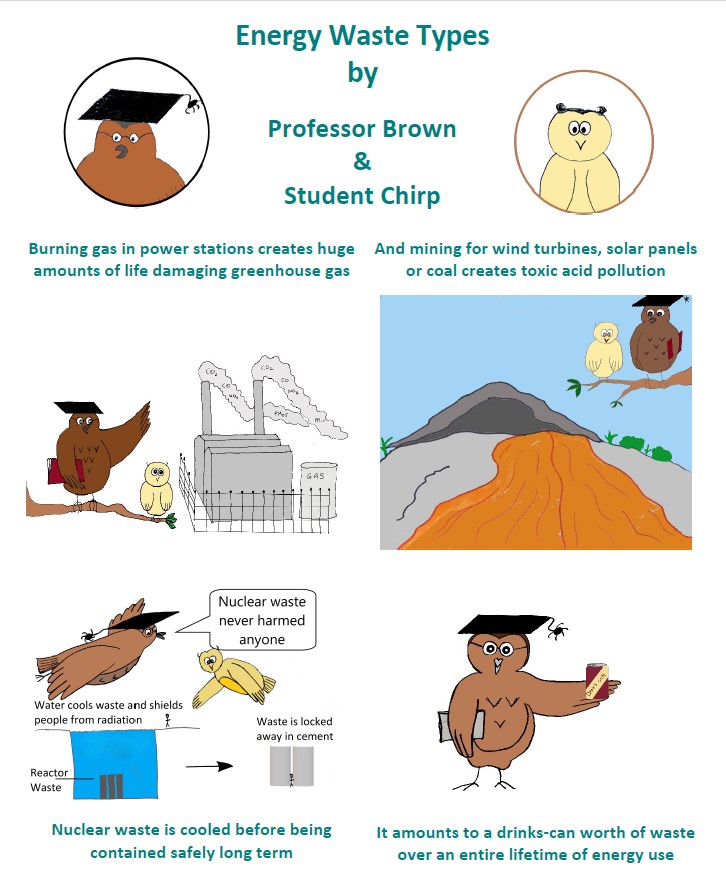
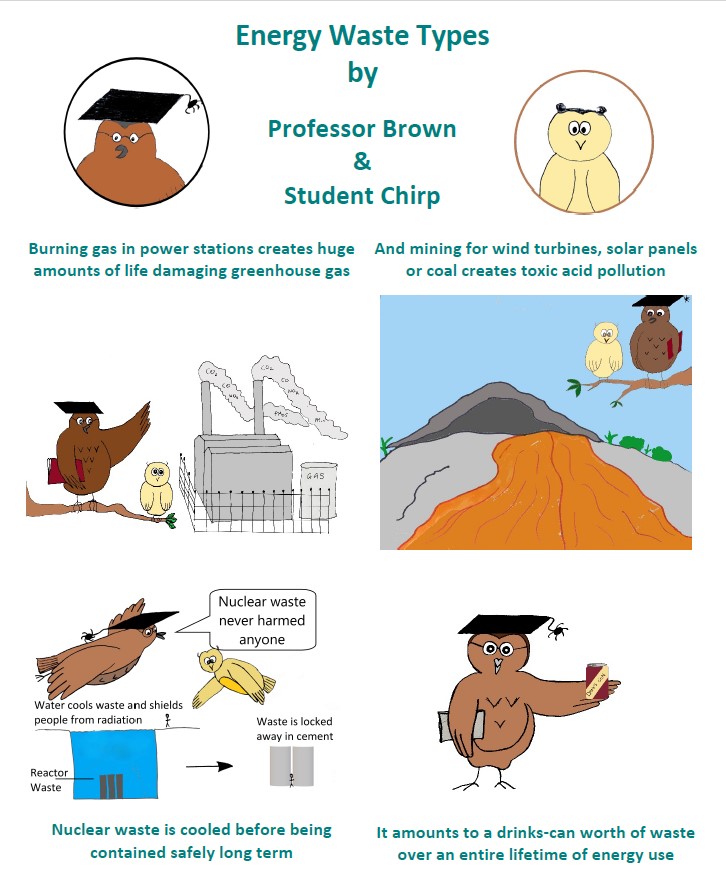
    Contrary to media reporting, radioactive waste is not a public health hazard, and it never hurt anyone. The issue of public mistrust is discussed here.

    Emissions from burning fossil fuels, on the other hand, cause devastation worldwide by contributing to more frequent and intense extreme weather events like typhoons, droughts, and famines.

    Also note significant chemical waste arises from the materials needed for intermittent energy technology around which the grid burns gas.

    The nuclear industry is held to incredibly high account for the waste produced. The radioactive content mostly consists of heavy metals, and this is published in the publicly available UK radioactive waste inventory. A natural fission reaction below Gabon, which happened 2 billion years ago, and the ‘waste’ is still there; it hasn’t harmed anyone or anything.

    Secondly, from the discussion with Dr Pete Bryant of Sizewell C, it is pointed out that although people immediately think of radioactivity from nuclear fission, the issue in practice is more about the excess heat that, for thermodynamic reasons to do with the Rankin/Carnot cycle, like with any thermal plant, poses more of a problem for those occupied with building a nuclear power station than the very small amount of contained solid waste.

    Third is the consensus around what constitutes the level of radioactivity that we should be concerned about. 

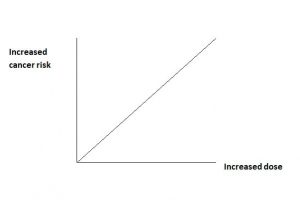
    The current regulations for ionising radiation are largely based on a dose-response relationship established over 80 years ago by Herman Mueller, using very basic technology at the time. This framework operates on the unproven assumption of a stochastic effect that only ‘no dose’ is a safe threshold.

    See our 3 minute video which explains the problems of LNT:

    However, with advancements in monitoring technology, we now know that low background radiation exists globally, and our bodies are well-adapted to it.

    Given the nuclear industry is regulated to ensure public exposure doesn’t exceed 1 mSv per year (for perspective, this is lower than the natural background radiation in Cornwall, which is 2.7 mSv), it’s little wonder why nuclear new builds have become increasingly costly and timely. In some areas of the world, background radiation levels exceed 200 mSv with no adverse health effects observed in those populations.

    It seems we have a choice: either we base our regulations for low-dose radiation on actual evidence, or we apply equivalent pollution levies to greenhouse gases.

  • Population and climate

    The climate emergency, cost-of-living crisis and wellbeing are the top concerns of young people in the UK and I argue that the latter two issues can be reduced if climate change and energy poverty are properly addressed.

    ‘Too many people’ may be true in respect of, say, urban planning, but for understanding why climate change, and it’s knock on effects are happening, it demonstrates a lack of understanding of the cause, effects and solutions.

    Population control measures have been implemented to the point that the global birth rate is already very low at less than 2.4 people. And the reality is that our population will continue to increase. Yes there are a lot of people, but this is unhelpful in trying to resolve the problem of droughts, starvation, civil unrest, disease, refugees, energy inflation and cost of living crises, many of which are indirectly a result of climate change problems.

    In terms of preserving nature, it’s important to remember that species loss is due, in part, to two separate issues: habitat loss and climate change, it’s an error to conflate them. And as for the cause of climate problems, the portion of blame for global emissions is unevenly distributed (eg North Americans emit most carbon dioxide per capita), so fewer people in less developed countries will make little difference.

    Because radiophobia has been erroneously presented as a bigger issue than climate change, leading to confusion and obfuscation, few recognise that if we replace fossil fuels with nuclear fuels that we can be optimistic without endorsing greed, for example by dis-incentivising air travel.

    So you see, the ‘too many people’ attitude is wrong, let alone nihilistic.1

    To propagate the thought that world climate problems result from the number of people, strips a person’s life of colour and meaning and evokes a personal sense of insignificance, shame and hopelessness. We need kind and caring people to shine their light, because all lives have meaning and purpose. ‘Too many people’ disconnects us from one another, separates us from nature, and above all does nothing, pragmatically, to address the rising emissions issue.

    1: Nihilism is a philosophy that rejects generally accepted or fundamental aspects of human existence, such as objective truth, knowledge, morality, values, or meaning. 

  • Educational material: Options at a glance

    ‘Atomica Saves the World’: Printable story for children to understand climate change and what we can do about it.

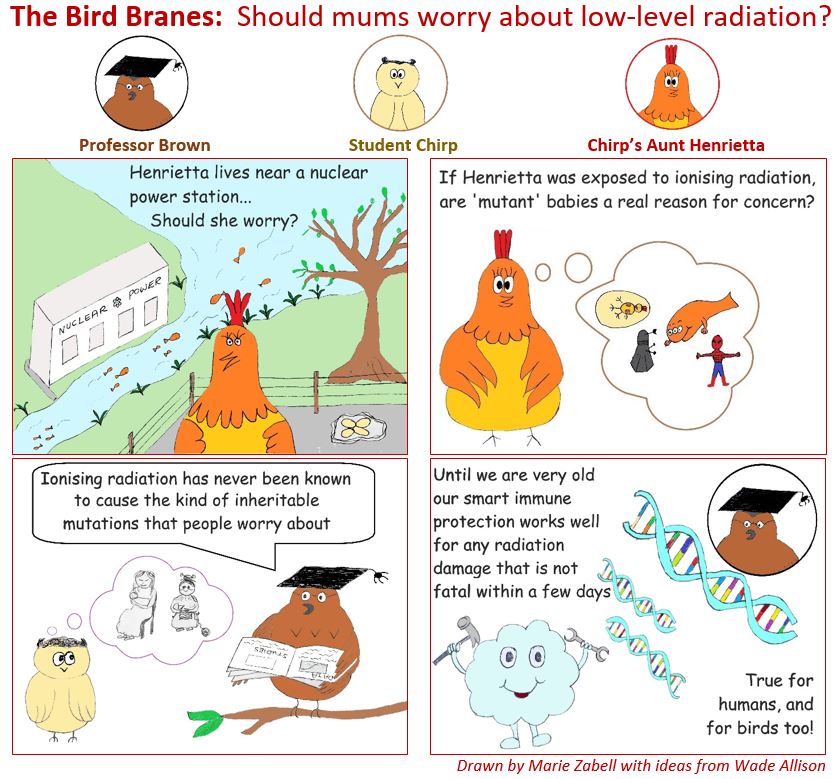
    Low-Level Radiation concerns: Henrietta learns that Mums don’t need to worry about mutations from nuclear power.

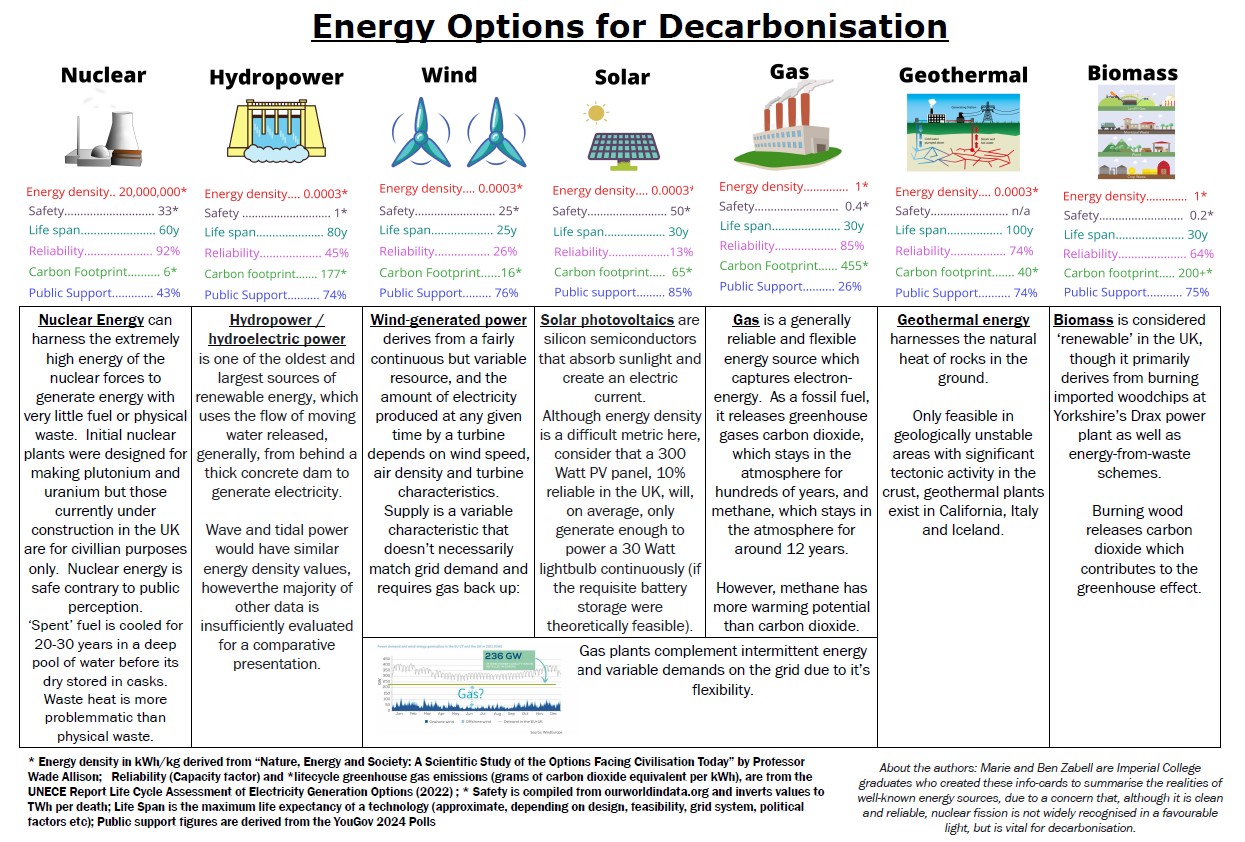
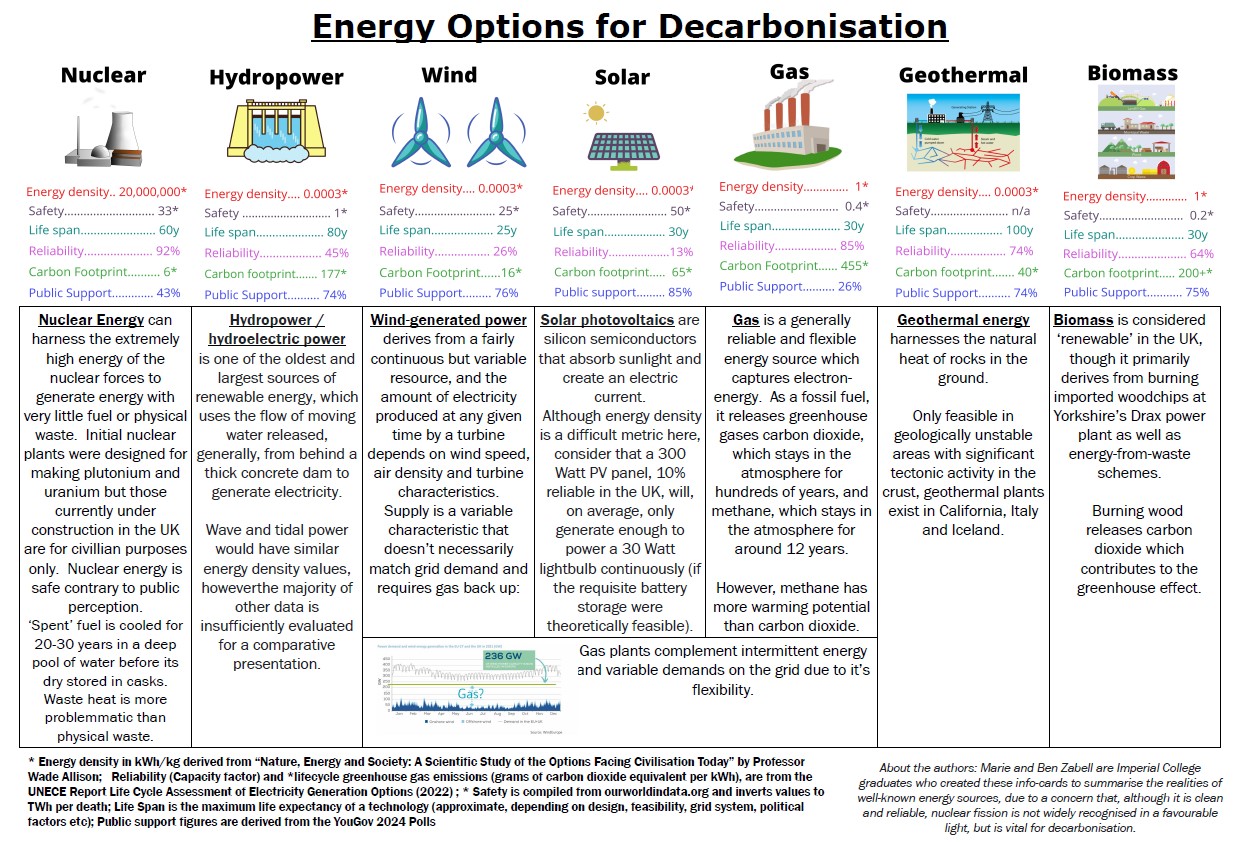
    Decarbonisation options poster to summarise sources feeding the UK’s electric grid:

    Linear No Threshold Model: an explanation for the origin of radiophobia
    via Youtube

    If public policies promote a fear of low level ionising radiation from nuclear facilities over and above greenhouse gases, then decarbonisation will be very difficult.


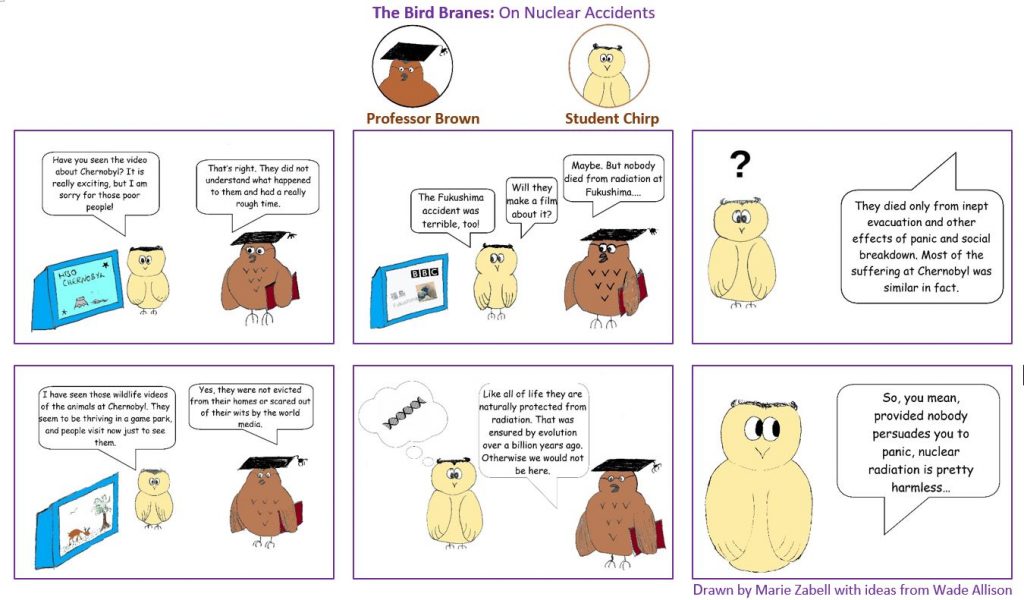
    Nuclear Accidents: Professor Brown and his student Chirp, discuss high profile accidents in the media. View animated version here

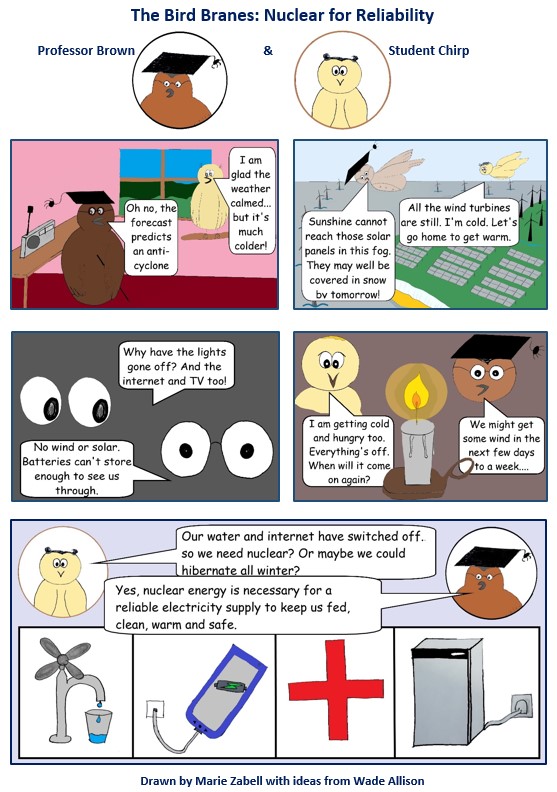
    Nuclear for Reliability: This illustration explains the serious consequences from giving an electricity grid preference to weather-dependent renewable energy over safe, reliable, low-carbon nuclear.

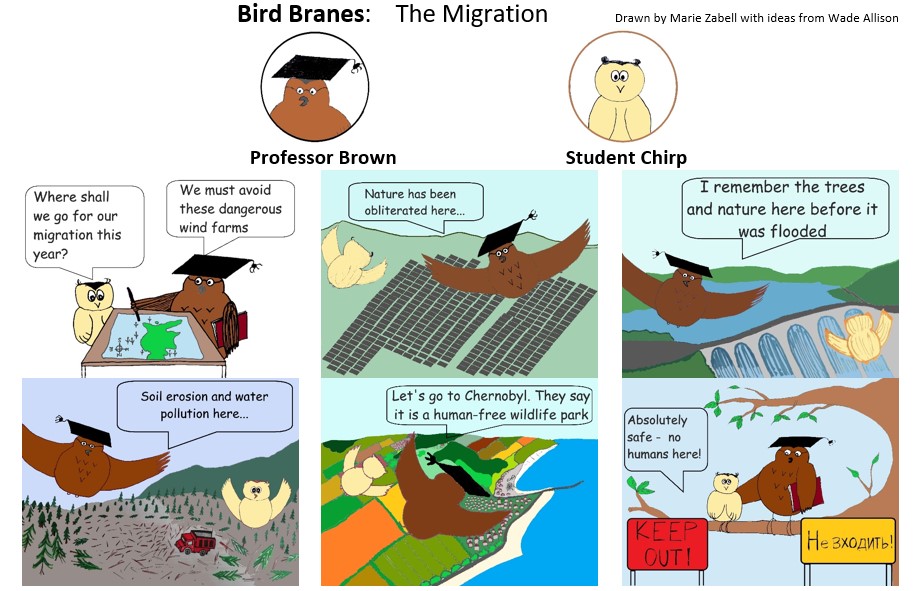
    The Migration: The Bird Branes have chosen their family migration destination this year. Avoiding all those renewable hazards they are going to Chernobyl. How sensible! The safest place to go.

  • 10 Misconceptions about nuclear power

    • “Nuclear power is a Government ploy to manufacture weapons”: No, not any more, there are conditions laid down in the Euratom Treaty safeguarding the proliferation of civil nuclear fuel.
    • “People died at Fukushima from radiation”: No-one died from radiation but many people died as a result of the nocebo effect and stress of being relocated away from their homes.
    • “Chernobyl is the worst disaster ever”. A reactor meltdown is not a bomb. The accidents at Chernobyl killed 54 people – far fewer than have died in either the fossil fuel or renewables industry year on year. The Chernobyl accident may well eventually result in a total of 16,000 excess thyroid cancer cases, of which only 1% (160) across 3 countries would be predicted to be fatal [1]. Had iodine pills been issued in the aftermath, this number would be much lower.
    • “My foetus will develop an abnormality if I am exposed / eg the fish in the sea at Fukushima will grow three eyes”: No. Cells can heal after levels radiation exposure orders of magnitude higher than deemed safe (think of the massive doses people get in radiotherapy). Research has shown that if genetic mutations of this sort could occur in humans, this would require doses larger than those actually required for it to be fatal. Likewise, inheritable human genetic mutation by the kind that people worry about has never been detected. There is a discussion of the ICRP adopted LNT model which many scientists have discredited for low level exposures [2]. Atomic advocates UK have created a video here.
    • “Renewables are better for the environment” Not really. Biomass has been considered a large component of ‘renewables’ and as such emits CO2. Wind, solar and tidal fluctuate and need fossil fuel back up so they support fossil fuel generation. Neither are massive banks of batteries ‘renewable’. Unfortunately a lot of land and mineral resources are necessary for a relatively small output [3] [4].
    • “Fusion will be better.” Maybe, but we need to decarbonise now, not 20 years time (weren’t we told this 20 years ago?).
    • “What about the waste?” Yes it’s sealed and contained, and high level waste is vitrified so that it doesn’t leach into the environment. Incredibly well managed just like any other waste stream. Also very small in volume compared to that from any other energy industry.
    • “Terrorists will get hold of the waste and make a bomb”: This is nigh on impossible. Even if someone, somehow, managed to obtain radioactive elements from a hot reactor core, then the technology to separate out and weaponise the Pu would need to be incredibly sophisticated, and the process very hazardous.
    • “High costs”: At present this is only due to ‘first of a kind’ construction costs and delays. Cost comes down with more plants being manufactured. Chinese & Korea are deploying nuclear power at half the cost of that in the UK because they are committed to it [5].
    • “Plutonium is the most toxic chemical on the planet”: Although there are hazards associated with being a heavy metal, people generally overestimate the risk. The hazards associated with burning coal are a million times more of a problem [6].

    CREDIT DUE TO Professor Wade Allison: Author of Radiation and Reason and Nuclear Is for Life

  • Global Warming

    What is Global Warming?

    Global warming is a phenomenon related to increased levels of carbon in the atmosphere, particularly carbon dioxide gas.  Carbon-dioxide is a chemical product of burning carbon-containing materials such as coal, oil, gas, wood and paper.

    Carbon dioxide is a ‘greenhouse gas’ meaning it has a particular property whereby it can absorb heat energy (infra-red), which has bounced off the surface of the earth, and re-distribute it back into the atmosphere, rather than allowing it to pass back into space, hence an overall trapping of heat energy. This is fine as long as the balance is right.

    Before the invention of the steam engine, the carbon dioxide concentration in the atmosphere was just under 280 parts per million (ppm); it has since risen to 419 ppm, which is more than 50% increase over pre-industrial revolution levels.

    We have proof that this imbalance is heating the planet, droughts are becoming more widespread and for longer and contributing to war and famine, ice is melting in the polar regions and mountainous areas, migratory patterns and therefore biodiversity is affected, and many habitats of fellow creatures are dying.

    In addition we are seeing changes in the way of ocean acidification, which has already caused changes in colour to parts of the great barrier reef, and is expected to affect shellfish populations. The ability of these fragile systems to continue to thrive is looking increasingly unlikely as most countries’ leaders continue to make superficial and trivial changes. Although the rate of ocean heating is equivalent to about 5 nuclear bombs per second, energy policies worldwide continue to incentivise fossil fuels over nuclear energy.

    Unfortunately, many academics, encouraged by radio-phobic organisations such as Campaign against Nuclear Disarmament, Friends of the Earth and Greenpeace, have plenty of public support in issuing ill-informed arguments on how to manage our predicament.   To think that  de-carbonisation is possible without nuclear energy goes against the IPPC reports and basic mathematical reason.

    As heating and transportation are most energy intensive, it makes sense to replace gas, coal and oil with nuclear powered electricity, including combined heat and power systems, and electric public transport sourced from a nuclear powered electric grid.


  • Inevitable Breaches of Safety

    Unless you are a specialist on radiation, a lot can be left to the imagination, and as we cannot sense radioactivity, our fear comes from the unknown.

    From some careful reading around the subject, the collective agreement as to what makes a ‘safe’ level of radiation, are somewhat biased; recent research into the cell biology and the ability to withstand radiation from such as radiation therapy used in cancer has shown that we are able to tolerate levels of radiation much higher than previously thought, and benefit from low doses – e.g. sunlight and radon therapy, which are beneficial as long as exposure time is managed.

    Currently, the ICRP (International Commission for Radiological Protection) dose-response safe radiation limits are based on a straight line graph called a hypothetical ‘linear no threshold’ ‘LNT’ model.

    This assumes that no cancer risk means absolutely no exposure to any sort of radiation.

    The truth is that low level radiation is not only unavoidable, but can also be beneficial, e.g. sunlight exposure to produce vitamins vital for healthy growth.  However, this LNT model doesn’t account for this so it could be argued quite strongly that real life dose-response relationships are not linear and this is an out-dated model.

    In addition, the nuclear industry in the UK has adopted a principle called ‘ALARA – As low as reasonably achievable’ to minimise radiation levels, whatever the cost, even though in reality the safe levels are orders of magnitude above that required to be adhered to. This means that a radiological ‘breach’ or ‘leak’, most likely harmless, going to happen frequently, and make the nuclear industry look careless and neglectful.

    Nothing is without risk but there needs to be some perspective here, to realign some truths about the levels of what should be deemed (un)acceptable into the decision making process to prevent further loss of lives.  For example, it was the fear and stress of evacuation and relocation of people from Fukushima that caused premature deaths.  Not one person died as a result of radiation exposure.

    Huge amounts of money go into proving, by way of nuclear safety reports on regulated sites, that they are fail-safe and a miniscule chance of death can result to anyone near or far. Such expenses make the nuclear option prohibitive, whereas in fact, the nuclear industry has one of the safest records per TWh energy production.

    It is time to re-evaluate if we are to continue to feed our voracious consumer appetites for energy as  the alternative to fossil fuels.

  • Small Modular Reactors

    Small Modular Reactors (SMRs) are part of a new generation of nuclear power plant design being developed in several countries to supply small communities.

    Other than residential electricity capacity – which could theoretically support a small city in the UK residential capacity and not much else, their design is also suggested for use in high-power industrial units.

    The idea behind SMRs is that they will be pre-manufactured at a plant and brought to site fully constructed, which is optimal in remote areas. While the smaller power output of an SMR means that electricity will cost more per MW than it would from a larger reactor, the initial cost of building the plant is much less than that of constructing a more complex, large nuclear plant, making the SMR a smaller-risk venture for power companies than other nuclear power plants.

    Small Modular Reactors (SMRs) have been a catalyst for renewed interest in the possibility of using smaller, simpler units for generating electricity from nuclear power. This interest is also driven both by a desire to reduce overall cost and to provide an alternative source of power to large grid systems.

    Of the designs available to us here in the UK, the integrated pressurised water reactors are most technologically ready, such as those already used in submarines. There are estimated to be in the region of over 45 SMR designs under development in the US, Europe, China and elsewhere for various purposes [SOURCE: IAEA Advances in Small Modular Reactor Technology Developments].

    The UK’s Penultimate Power and the Japanese Atomic Energy Agency  are working on a High Temperature Gas-cooled Reactor (HTGR),a nuclear reactor that uses graphite with a once-through uranium fuel cycle.  It is a design already operating in Japan, and is to be ‘walk away safe’.  It uniquely provides carbon-free heat up to 950oC for industrial processes, including green hydrogen at point of use via the sulphur-iodine process [2].

    Moltex are an UK-Canadian venture who have developed a stable salt modular reactor ready for implementation. The liquid salt fuel mixture is contained within solid fuel assemblies. The fuel assemblies are then submerged in a pool of pure liquid salt coolant.

    Others include the simple boiling water reactor design: BWRX-300, by Hitachi, the high temperature reactor design by Cavendish Nuclear or the larger units proposed by Rolls-Royce.

  • Fukushima Lessons Learned

    Despite the negative press, the human health effects from radiation at Fukushima have been proven to be nil.

    So is it justified to label Fukushima a disaster? Perhaps the breach in the radiation levels as based on a dose-response relationship known as the linear non threshold (LNT) model is, for all intents and purposes a model which, with continued use has the potential to continue to create irrational fears about radiation.

    The currently used model suggests that no radiation exposure is the only safe level. Experience tells us this is not true –  indeed at low levels,  radiation, such as sunlight, is known to have a positive effect on human health. Perhaps the expense at which compliance is enforced can do with being put into perspective to avoid over-reacting.

    Sources:

    May 2013 – World Nuclear News
    The most extensive international report to date has concluded that the only observable health effects from the Fukushima accident stem from the stresses of evacuation and unwarranted fear of radiation.

    “On the whole, the exposure of the Japanese population was low, or very low, leading to correspondingly low risks of health effects in later life” – Wolfgang Weiss (UNSCEAR)

    March 2013 Time Magazine: Bryan Walsh

    Meltdown: Despite the Fear, the health risks from the Fukushima Accident are Minimal

    The World Health Organization’s (WHO) report (PDF) on the estimated health effects from the Fukushima nuclear with link to report.

  • JOAN PYE SPEAKS AT SUSTAINABILITY LIVE, NEC

    Joan Pye will be speaking today, 19 May 2009, at Sustainability Live, a conference accompanying an exhibition on Climate Change Solutions – Generating a Low Carbon Future at the NEC.  Other speakers include:

    The Rt Hon Ed Miliband – M.P Secretary of State for Energy & Climate Change;
    Olwen Dutton, Chief Executive, Regional Partnership, WM Regional Assembly, West Midlands Local Government Association;

    Rhian Kelly, Head of Climate Change Group, Confederation of British Industry.

    Joan will be putting forwards the case for nuclear energy as a clean, green, cost-effective, proven solution to meet the UK’s energy needs.

  • Fells Associates report

    Joan Pye and her supporters have been in touch with Professor Ian Fells, co-author of the recent report “A Pragmatic Energy Policy for the UK.”