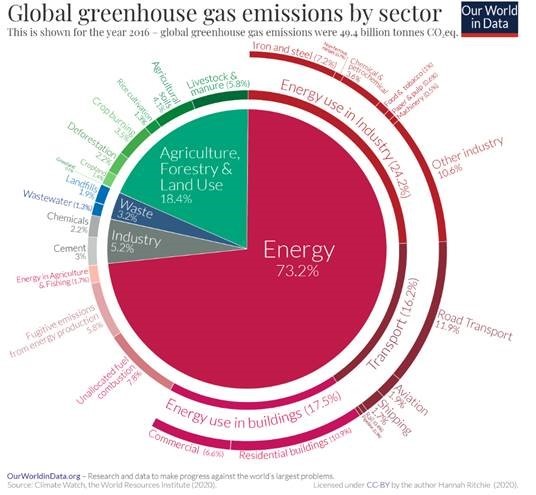
While transport, electricity and heat are responsible for over 70% of our greenhouse gas emissions, it makes sense to focus on decarbonising electric grids and electrifying our heating and transportation systems.
Currently, electricity production (gas / wind / solar / imports) depends on contractually set market prices. The market does not care about working towards the nations’ best interests and because of this, the UK does not have security of supply.
For example, it is estimated that over 50% of the UK’s energy supplies are currently imported: Energy Flow Chart Mtoe 2025
The UK is building two large twin-reactors from EDF, which should replace generating capacity coming to the end of its life over the next 10 years. Still, as a nation we need to make strategic investments in low carbon energy infrastructure that realises the truth around the interdependence of different competing technologies that want to source our supplies.
In 2019, the Government set the objective of net zero carbon emissions by 2050, which in addition to finding alternative energy sources, ought to be a good motive to invest in more nuclear capacity on the grid with electrification of transport by rail and tram where possible.
Individual lifestyle changes to promote better energy efficiency, eating less meat and planting trees are compromises that help somewhat, but are not enough to realistically slow, stop or reverse carbon emissions; we need a reliable low-carbon energy supply.
In France, 75% of their electricity is produced by nuclear power which took 15 years to build out. This is an achievable goal, but our Government needs to commit the funding to cover the high upfront costs. A fleet of reactors, rather than an approach of build one then wait and see, is expensive and under-utilises knowledge and skills.
Electricity Production
The chart below shows the UK electricity generated (- not consumed) – by fuel type according to Carbon Brief 2019.
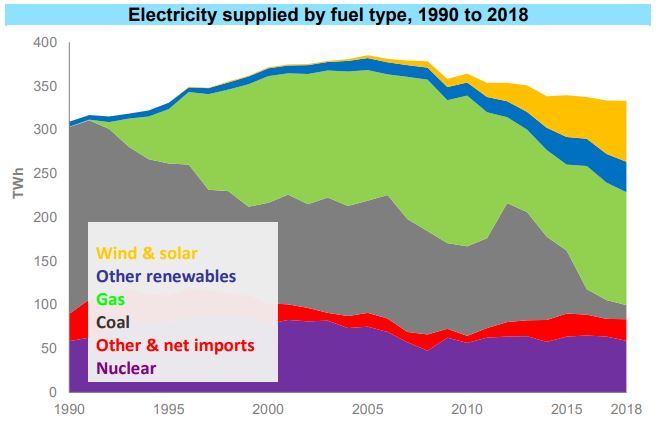
As we can see, fossil fuels provide the main provision for conversion to electricity primarily, due to economic favourability. Drawbacks to consider with fossil fuels are pollution from burning coal, gas and oil, mining and off shore drilling hazards, and national dependency on sources from unstable countries in the far-east.
‘Renewables’ harness energy from their environment. Wind, solar, wave and tidal, for example, are driven by natural earth cycles. Unfortunately, these sources cannot be relied on to generate in the region of their maximum electricity output at all future times of high electricity need. This results in intermittency problems that put incredible strain upon the national grid.
Nuclear power is generated using Uranium, which is a metal mined in various parts of the world. However Thorium is being considered as an alternative – and more abundant nuclear fuel – which has no affiliation with weapons manufacture.
A dedicated thinker and logistician, Professor David MacKay collaborated with the public in producing a freely available book which has detailed analysis of the realistic provision from each of these energy sources [1].
Unfortunately, the image of nuclear as a civil power source is controversial due to the fear of low level radiation creating illness or genetic mutations. These worries are completely unfounded, and a sole product of propaganda by entertainment outlets, journalists and even politicians during the cold war.
The next step
Governments should turn to nuclear energy because it is increasingly economic, reliable and environmentally friendly. The wind does not always blow and the sun does not always shine, but nuclear energy can be produced regardless of the weather, which is why the nuclear industry is almost an essential part of the future of sustainable energy.
The global addiction to fossil fuels may well be a in part a result of fear to change even though nuclear energy can offset environmental costs of fossil fuels in terms of reduction of greenhouse emissions.
Another proposal is to look at the potential for combined heat and power (ie for district heating) waste heat from biomass/small modular reactors.
Civil nuclear energy offers the potential for positive impact considering conflicts provoked over the need for oil, problems of warming due to greenhouse gases, and the impact of chemical toxins from fuel burning on human health.
References
1) ‘Sustainable Energy Without Hot Air’ – Professor David MacKay considers how each potential energy source could meet consumption in the UK.